01
Human resources
Employee records, organization charts, lifecycle events, loans, expenses, settlements, training, and health and safety on one people file.
Connected to the core


Search products, services, projects…
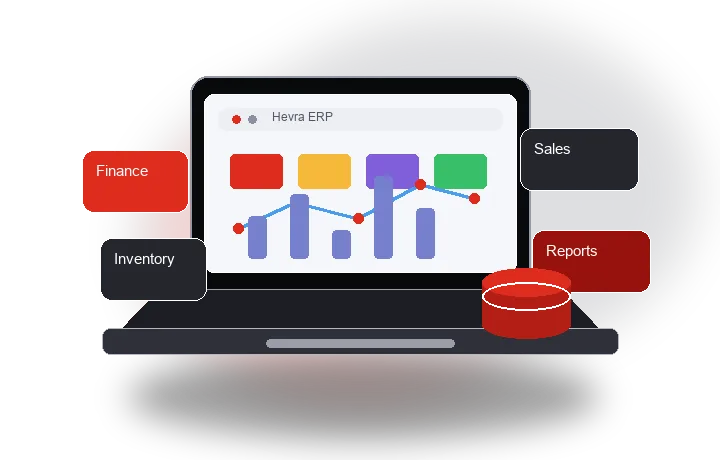
Enterprise resource planning
Finance, people, sales, inventory, manufacturing, workflows, and industry operations in one AI-native ERP.
Platform capabilities
Start with the modules you need today, then extend on the same foundation as the operation grows.
Employee records, organization charts, lifecycle events, loans, expenses, settlements, training, and health and safety on one people file.
Working hours, attendance cards, schedules, overtime, and holidays connected to payroll and leave.
Requests, calendars, and approvals kept against the same employee record.
Periods, statutory rules, allowances, deductions, automation, and payslips calculated from the live people and attendance record.
Hiring, offers, scorecards, reviews, and promotion decisions inside the same HR operation.
Timers, timesheets, and project effort for teams whose work is measured against delivery, not only clock-in.
Pensioner registry, life certificates, benefit calculation, payroll, cards, disputes, and self-service for public pension programmes.
Identity badges, company contracts, reports, and general requests for controlled site and workforce access.
Chart of accounts, journals, ledgers, trial balance, statements, cash, budgets, revenue recognition, and customer and supplier accounting.
Suppliers, requisitions, purchase orders, agreements, returns, and procurement planning connected to stock and finance.
Clients, quotations, sales orders, invoices, returns, and commercial performance on the same customer record.
Accounts, pipeline, follow-up, and client, customer, and vendor portals around the commercial relationship.
Warehouses, lots, dispatches, deliveries, material movement, fixed assets, and assignments.
Bills of materials, routings, MRP, capacity, production orders, and scheduling connected to inventory and cost.
Registers, promotions, gift cards, barcodes, pricelists, taxes, and payments connected to stock and accounting.
Tables, waiters, kitchen print, entry and bar cashiers, and cash control for restaurants and venues.
Territories, routes, van stock, visit proof, and GPS supervision for representative-led sales.
Storefront, catalogue, carts, orders, payments, promotions, and customer operations on the ERP record.
Shipping orders, tracking, branches, brands, wallets, invoices, and partner handoffs for logistics operators.
Projects, epics, boards, sprints, backlog, and issues kept with finance, procurement, and time records.
Workflows, tasks, templates, letter templates, and e-sign for approvals that must leave an accountable trail.
Tickets and service follow-up for internal and customer operations that need a recorded response.
Classified records, categories, retention, and retrieval for high-volume institutional files.
Academic structure, students, examinations, fees, and campus administration when higher education runs on the same ERP.
Standards, evidence, self-study, reviews, and reporting for institutional accreditation cycles.
Cash desks, rates, teller sessions, KYC, transfers, and exchange reporting under accounting control.
Ask ERP, grounded record answers, document AI, action proposals, and automation playbooks on the live operational data.
Custom fields, custom modules, and connectors so the platform can follow the organization’s real forms and integrations.
Tenant-scoped English, Arabic, and Kurdish overrides for the language the operation actually uses.
Roles, sessions, companies, and permissions that keep each user inside the records they are responsible for.
When the organization needs a narrower operating surface, the same platform can be scoped as a named product—without breaking the shared record.
Implementation model
Discovery establishes responsibilities, data, approval paths, integrations, reports, and the operational conditions the platform must support. Delivery then moves through configuration, validation, rollout, training, and continued improvement.
Map workflows, responsibilities, data, and constraints.
Shape roles, modules, integrations, and reporting.
Test with real operational scenarios and responsible teams.
Roll out with training, support, and measured improvement.
Explore Hevra ERP
Bring the workflow, constraints, and existing systems. Awrosoft will help define a practical product and implementation path.